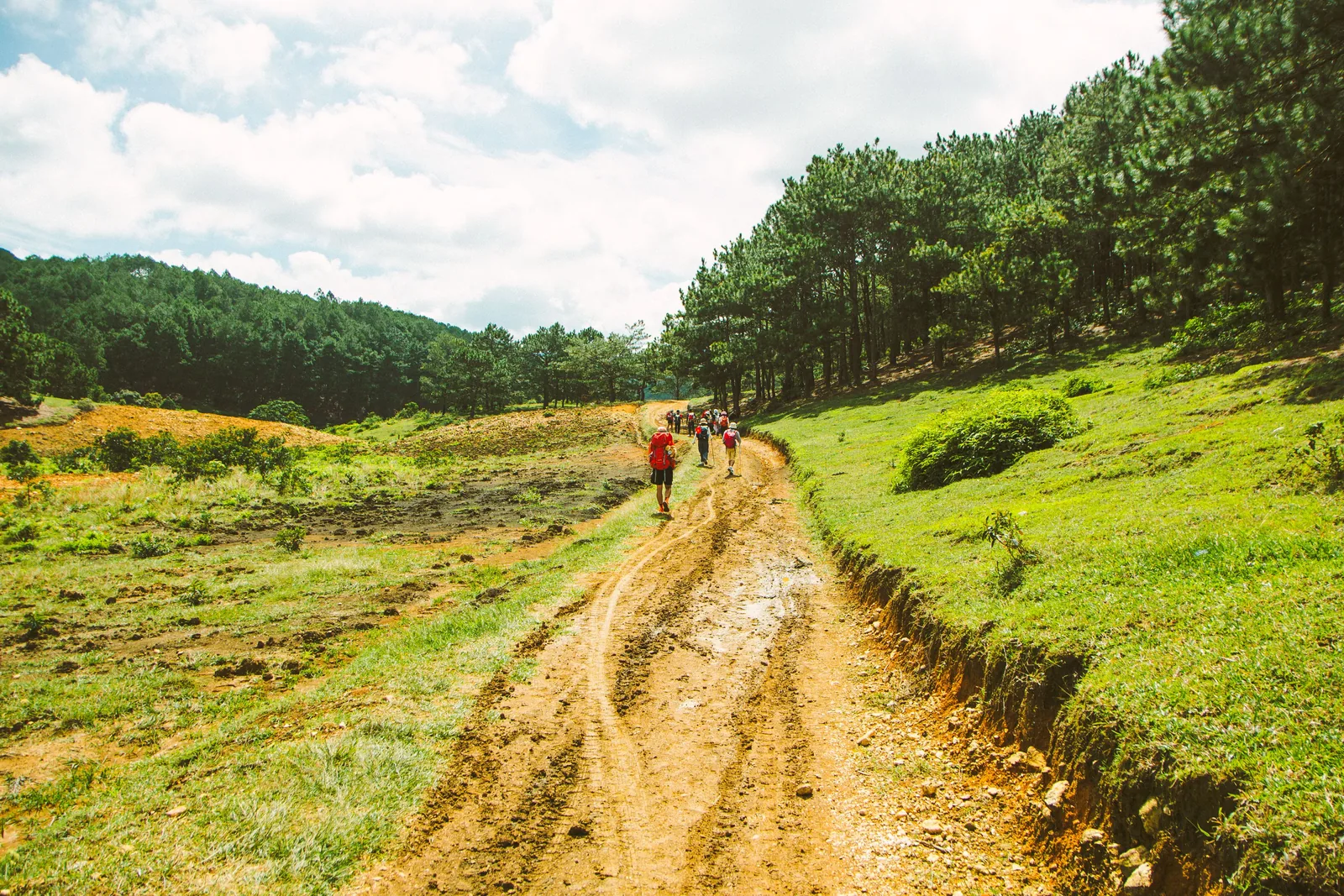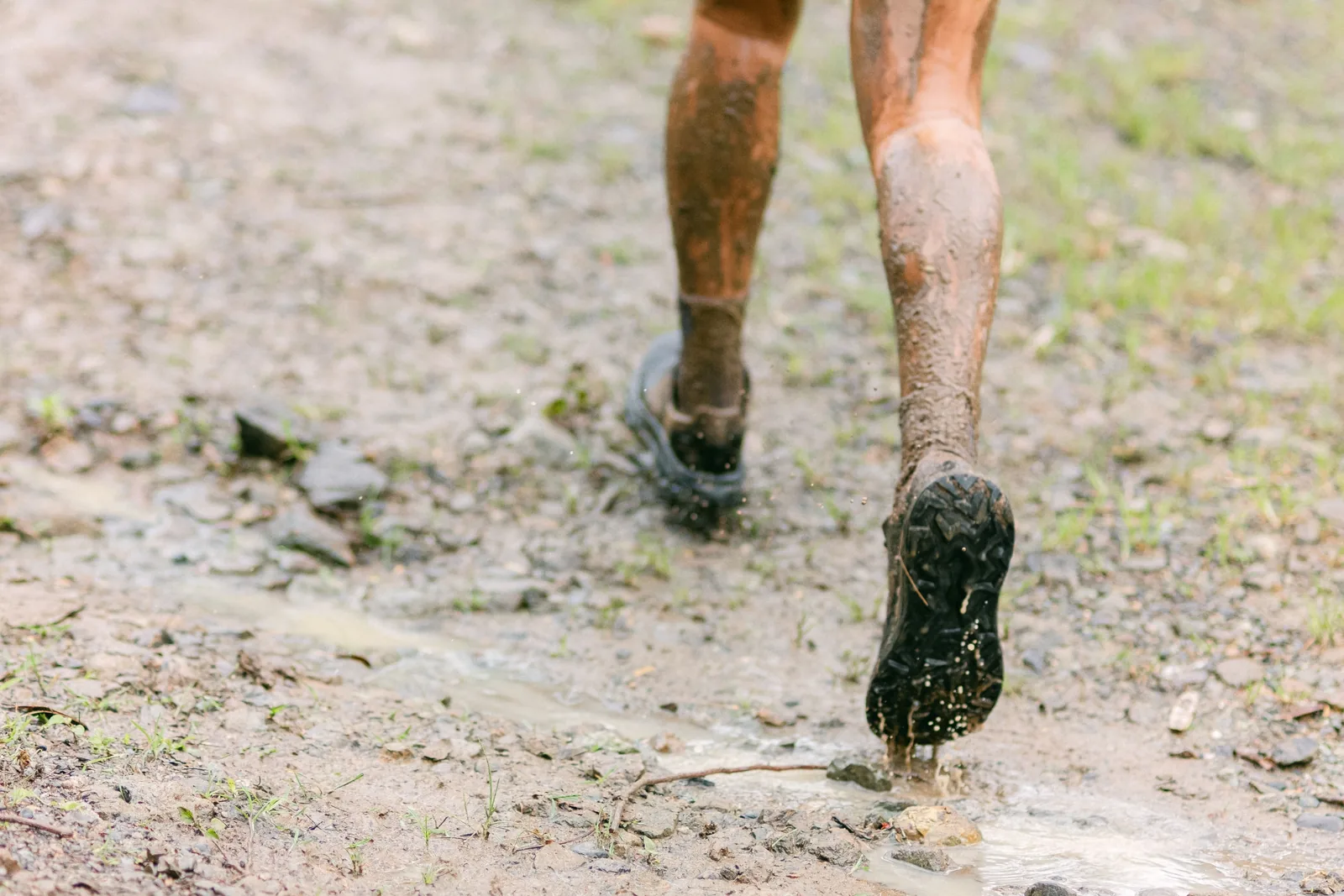
Trail running is running on natural, off-road terrain instead of paved roads. Trails can take you through mountain paths, forest singletrack, dirt tracks, rice terraces and ridgelines. In Vietnam, that can mean everything from the limestone mountains of the north to the pine forests around Đà Lạt.
Unlike road running, trail running is not just about distance or pace. Elevation gain, terrain, technical difficulty and weather all play a major role in how hard a trail can be.
What makes trail running different?
On the road, pace and distance are usually the main things runners think about. On trail, the terrain constantly changes. You may run, hike, climb steep sections, descend rocky paths and cross muddy or uneven ground during the same race.
This means that a 30 km trail race can be much harder than a 30 km road race. The distance alone does not tell you how difficult a trail will be.
Distance, elevation gain and terrain
What does D+ mean?
D+ (elevation gain) is the total amount of climbing on a course, measured in metres. For example, a race with 30 km and 1,500 m of D+ requires you to climb a total of 1,500 metres throughout the course.
D+ is one of the most useful numbers for understanding a trail race, but it is not the only one. Distance, elevation gain and terrain should always be considered together.
A flat 42K road marathon and a 42K mountain race with 2,200 m of D+ are completely different efforts. A technical trail with rocks, roots, mud and steep descents can also be difficult even when the elevation gain is relatively modest.
Common trail running distances
- Short trail — under 20–21K: a good introduction to trail running, especially with moderate elevation gain.
- 21–30K: a longer trail challenge that requires good pacing and preparation.
- Trail marathon — around 42K: a full-day mountain effort for many runners, depending on the elevation and terrain.
- Ultra — 50K and beyond: races that go beyond the traditional marathon distance and often involve significant climbing.
- 80K+: long ultras that can last many hours or continue overnight.
There is no single definition of a "hard" trail distance. A 25K race with 2,000 m of D+ can be more demanding than a relatively flat 50K.
Do you have to run the whole way?
No. Walking is a normal part of trail running.
On steep climbs, hiking can be more efficient than running, even for experienced and elite trail runners. The goal is to manage your effort and keep moving rather than trying to run every metre.
Learning when to run and when to hike is one of the most important skills for a beginner.
How technical is trail running?
Trail difficulty is not only about elevation. Some trails have smooth dirt paths that are easy to run, while others can be rocky, muddy, steep or covered with roots and uneven ground.
Technical terrain requires more attention, balance and careful foot placement. Downhill sections can also be surprisingly demanding, even when they do not add to the elevation gain.
When choosing your first trail race, check the course description, elevation profile and terrain before looking only at the distance.
What do you need to start trail running?
You do not need a large amount of equipment to start trail running.
- Trail running shoes with suitable grip for the terrain.
- Water, usually carried in a soft flask or running vest.
- A small running vest for longer outings and races.
- A phone for navigation and emergencies.
- Food or energy gels for longer runs.
- Weather protection when running in the mountains or during changing weather.
For your first trail run, start with a manageable distance and focus on learning how your body responds to climbs and descents.
Trail running in Vietnam
Vietnam offers a wide variety of trail running environments, from high mountain valleys to tropical forests and coastal hills.
- Sa Pa: mountain trails, rice terraces and steep climbs in northern Vietnam.
- Mộc Châu: rolling mountain terrain, valleys and rural trails.
- Ba Vì: forested mountain terrain within easy reach of Hanoi.
- Đà Lạt: pine forests, hills and generally cooler highland conditions.
- Núi Bà Đen: steep mountain terrain in southern Vietnam.
- Tà Năng–Phan Dũng: one of Vietnam's best-known long-distance trekking and trail-running areas.
Weather is another important factor in Vietnam. Heat, humidity, rain and changing mountain conditions can make a race considerably harder than the distance and elevation profile suggest.
How to choose your first trail race
If this is your first trail race, do not choose a course based on distance alone. Look at:
- Distance: how far you will need to move.
- D+: how much climbing you will have to complete.
- Terrain: whether the course is smooth, rocky, muddy or technical.
- Cut-off times: how quickly you need to reach checkpoints and the finish.
- Weather: particularly important for races in Vietnam.
For a first race, a shorter course with moderate elevation gain is usually a better introduction than immediately choosing a long mountain ultra.
Looking for your first trail race in Vietnam? Browse upcoming races by distance, location and elevation gain on our Vietnam trail races page.
FAQ
What does D+ mean in trail running?
D+ means total elevation gain. It is the sum of all the uphill sections of a course, measured in metres. It is one of the best indicators of trail difficulty, but terrain and weather also matter.
Is trail running harder than road running?
It is a different type of effort. Trail running is usually slower because of climbs, descents and uneven terrain. It can also be more demanding on your muscles, especially on steep climbs and descents.
Can beginners do trail races?
Yes. Many trail races offer short distances specifically suitable for beginners. Start with a manageable distance, check the elevation profile and make sure you understand the cut-off times.
Do I need special shoes for trail running?
Trail shoes are recommended because they generally provide better grip and protection on dirt, rocks, mud and uneven terrain. The amount of grip you need depends on the type of trail.
Is walking allowed in trail races?
Yes. Walking, especially on steep climbs, is completely normal in trail running. Even experienced runners regularly hike uphill to conserve energy.
What is the difference between trail running and hiking?
The main difference is the way you move and the goal of the activity. Trail runners generally cover the course at a faster pace and alternate between running and hiking, while hiking is primarily focused on walking and enjoying the route.
How much D+ is a lot for a trail race?
It depends on the distance and terrain. A race with 1,500 m of D+ over 20 km is significantly more demanding than a 1,500 m climb spread over 50 km. Always consider D+ together with distance and technical difficulty.
What should I consider when trail running in Vietnam?
Heat, humidity, rain and mountain weather can have a major impact on your effort. Carry enough water, check the weather forecast and choose equipment appropriate for the terrain and conditions.